On this page

Bottom line: Yes — the 65 km Guilin–Yangshuo trip takes 1.5 hours by car (rental ¥200–550/day + ~¥40 fuel) or 4 hours on the scenic Li River cruise (¥300–500/person). The bus (¥20–50) and high-speed train (¥40–60, near Xingping) are the budget options.
International Driving Permits are not officially recognized for driving in mainland China. You need a valid Chinese driver's license to rent and drive a car legally. Always verify current requirements with the rental provider and local traffic authority before you book.
Route overview
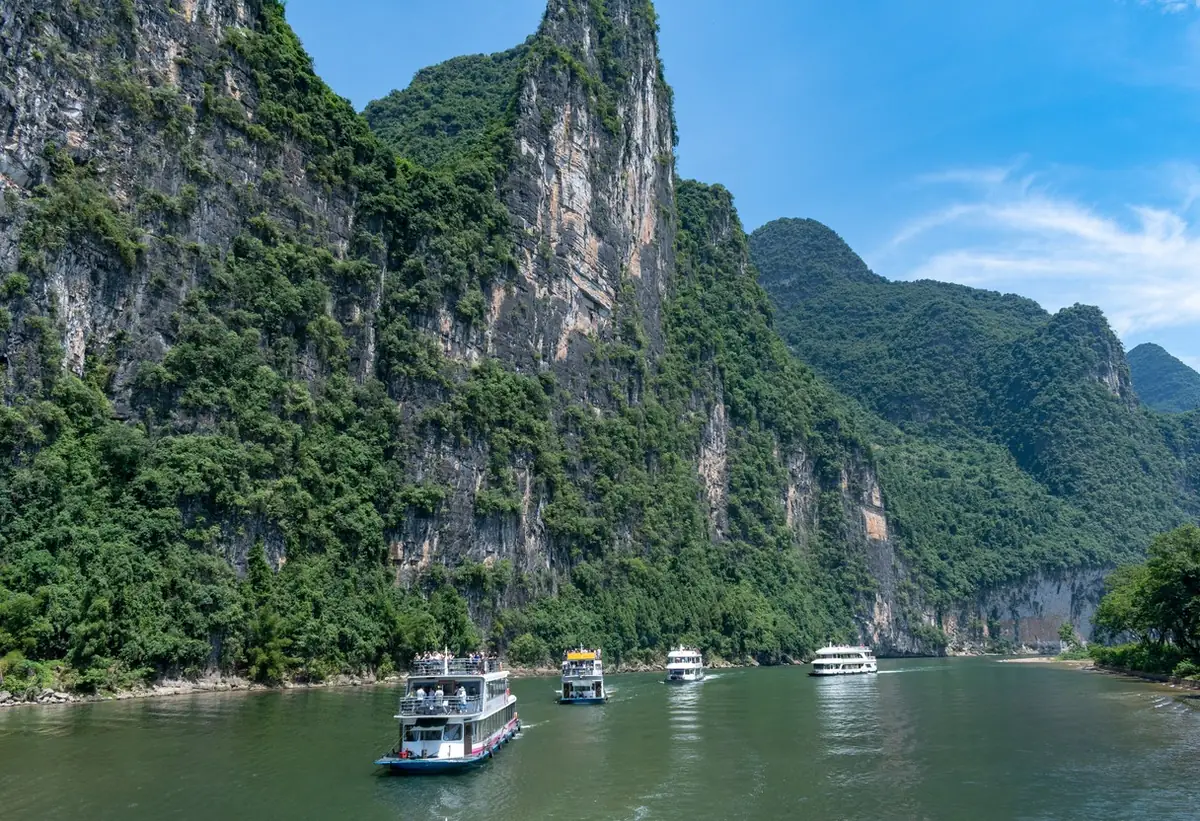
The route runs south from Guilin through farmland and karst peaks. The expressway (G65) is fastest; the older G321 is slower but more scenic and passes closer to villages.
Compare the four ways to travel

| Mode | Time | Price | Best for | Flexibility |
|---|---|---|---|---|
| Self-drive | 1.5 hrs | ¥200–550/day + ~¥40 fuel | Holders of a Chinese license | ??????????????? |
| Li River cruise | 4 hrs | ¥300–500/person | First-time visitors, scenery | ????????? |
| High-speed train | 30 min + 30–45 min transfer | ¥40–60 | Time-pressed, Xingping first | ???????????? |
| Bus | 2 hrs | ¥20–50 | Budget travelers | ?????? |
Self-drive wins on freedom if you hold a Chinese license; the cruise wins on scenery; the train and bus win on price. Read on for the details of each option. Once you arrive, see our Yangshuo attractions guide for the top 15 things to do.
Self-drive
Driving gives you the freedom to stop at Xingping for the 20-yuan viewpoint, the Yulong River bridge, and roadside photo spots. Parking is easiest at your Yangshuo hotel, so choose one with a lot.
- Distance: ~65 km
- Time: 1–1.5 hours direct, longer with stops
- Cost: rental car ¥200–550/day (US$29–79) + fuel + parking
- Best for: families, photographers, independent travelers
Read our full Guilin to Yangshuo road trip route.
Source & verification: Driving requirements and route distances are based on current Chinese traffic regulations and mapping data, reviewed in August 2026. Always verify current road conditions and rental requirements before travel.
Li River cruise
The standard cruise from Guilin to Yangshuo takes about 4 hours and passes the most famous karst scenery. You board near Guilin city and disembark in Yangshuo.
| Cruise type | Duration | Price range | Best for |
|---|---|---|---|
| Standard | ~4 hours | ¥300–500/person (US$43–72) | Most travelers |
| Luxury / VIP | ~4 hours | ¥500–800/person (US$72–115) | Smaller groups, better lunch |
| Bamboo raft (Xingping) | ~1 hour | ¥100–200/person (US$14–29) | Short scenic experience |
Price note: Approximate USD values use the August 2026 exchange rate. Cruise prices vary by operator, season, and demand.
If you have a rental car, the easiest plan is to drive to Yangshuo first, leave the car at your hotel, then take a taxi back to Guilin for the cruise.
Bus
Buses run frequently from Guilin Bus Station and Guilin South Bus Station to Yangshuo, with departures through the daytime roughly every 15-30 minutes on the popular routes — you rarely need to book far ahead, though buying at the station window or on Trip.com/Alipay a day early is wise on Fridays and holiday weekends. The trip takes 1.5–2 hours and costs ¥20–50. Buses drop you near Yangshuo town center, within walking distance or a short DiDi ride of most hotels. Exact timetables shift with season and demand, so confirm the current departure times at the station or on the booking app the day before you travel.
High-speed train
High-speed trains from Guilin to Yangshuo take about 30 minutes, but the station is near Xingping, not Yangshuo town. Add 30–45 minutes for the transfer. This option works well if you want to visit Xingping first.
Which should you choose?
| Priority | Best option |
|---|---|
| Scenery | Li River cruise |
| Flexibility | Self-drive |
| Lowest cost | Bus |
| Fastest total time | Expressway self-drive or bus |
| No Chinese license | Cruise or bus |
Cannot drive? Here's what to do instead
A Chinese driver's license is required to rent and drive in mainland China. If you do not have one, you still have excellent options for exploring Guilin:
- Private driver: Flexible door-to-door service, especially good for families or groups. Negotiate the route and stops in advance.
- Organized day tours: Cost-effective for Longji and Yangshuo highlights without the navigation stress.
- Li River cruise: The classic Guilin — Yangshuo scenic boat journey. See our Li River cruise guide.
- High-speed rail + local transport: Fast trains connect Guilin and Yangshuo; use DiDi or taxis for local trips.
- DiDi / taxi: Works well for short city trips and Guilin — Yangshuo transfers.
Compare all options in our Guilin transportation guide.
Emergency information
Important: Emergency numbers and service details should be verified before departure. The numbers below are the standard national codes used in mainland China.
- Police: 110
- Medical emergency / ambulance: 120
- Fire: 119
- Traffic accident: 122
- Your embassy or consulate: Save the local number before travel.
- Rental company: Save the emergency hotline provided at pickup.
Useful Chinese phrases
- Help: 救命 (jiùmìng)
- Call the police: 报警 (bàojǐng)
- I need a hospital: 我要去医院 (wǒ yào qù yīyuàn)
- There was an accident: 出事故了 (chū shìgù le)