On this page
Bottom line: Longji is a 2.5-hour mountain drive from Guilin. Stay one night inside the terraces, park at the entrance lot, and plan for sunrise and short hikes between viewpoints.
Overview
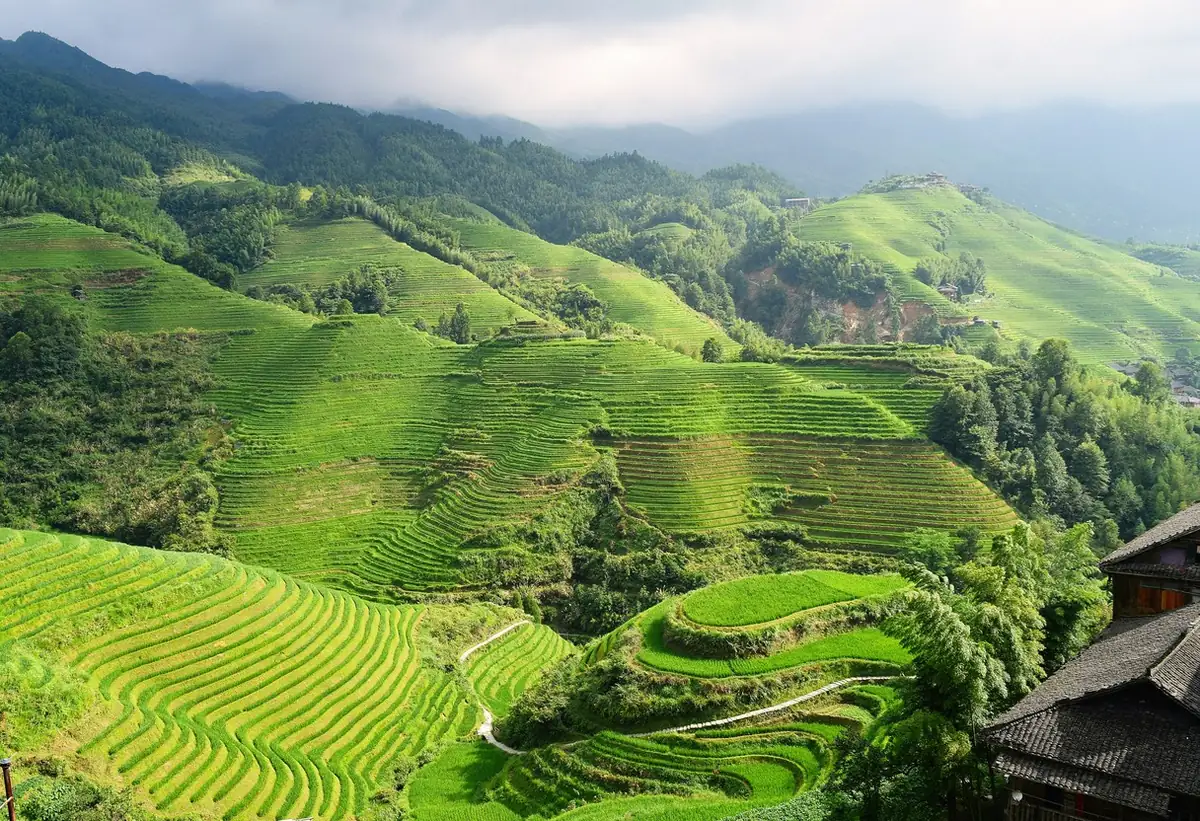
Longji Rice Terraces, also known as the Dragon's Backbone, are about 95 km north of Guilin. The terraces were carved into steep mountainsides over centuries by Zhuang and Yao villagers. Today the area is divided into two main zones: Ping'an and Dazhai (Jinkeng).
Most visitors come for the views, but the terraces are a working landscape, not a monument. In late September to mid-October you can join the rice harvest alongside local families — the most hands-on cultural experience Longji offers, and the reason many travellers now time their trip to the autumn gold window. See our harvest experience guide for dates and booking.
🧭 Navigate here
Why visit
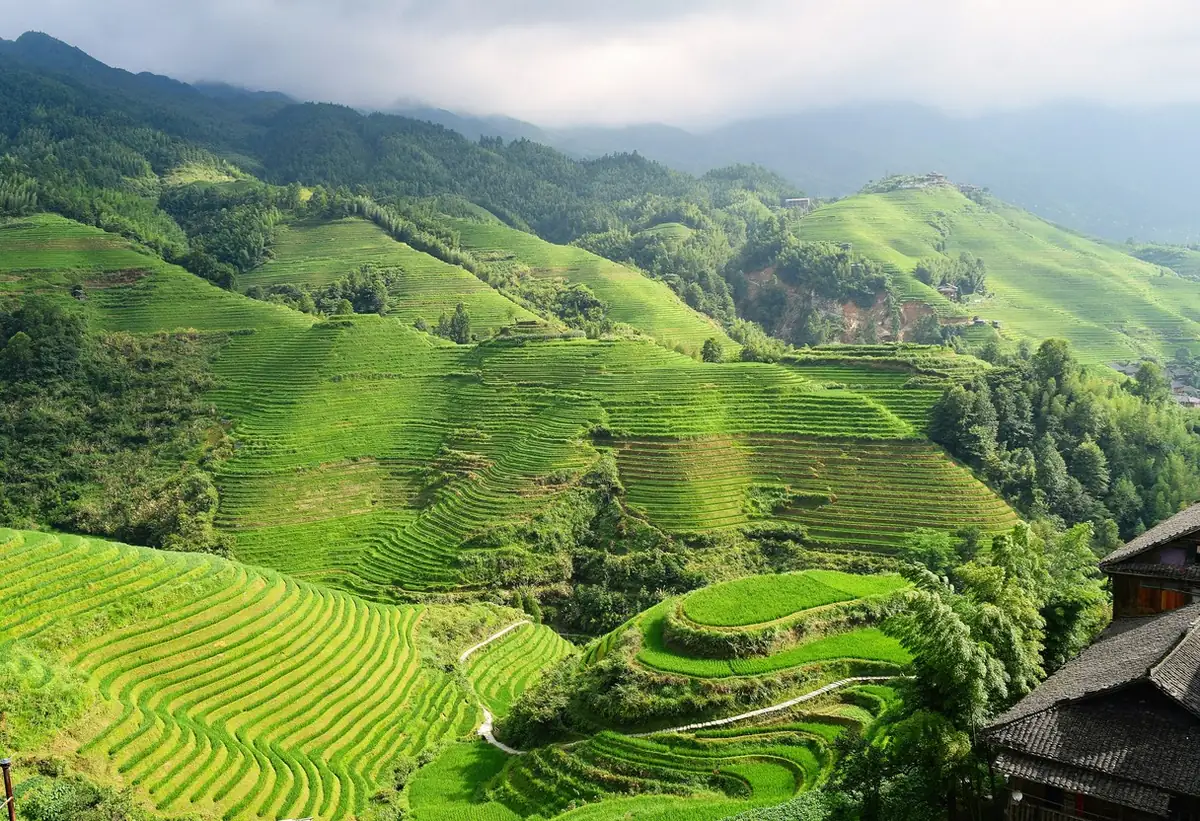
- Some of China's most photogenic terraced landscapes
- Traditional wooden villages with minority culture
- Excellent sunrise and sunset viewpoints
- A rewarding scenic drive from Guilin
How to get there
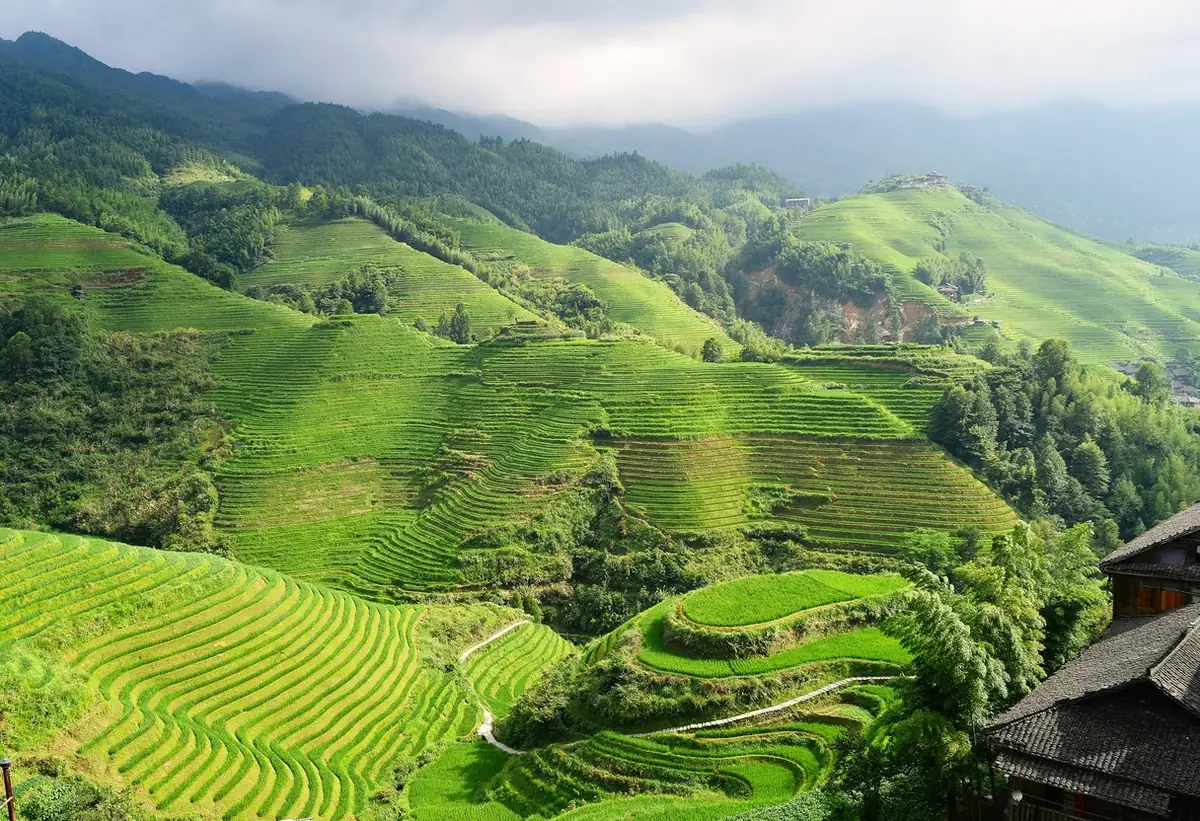
The most flexible way is by rental car or private driver. Public buses run from Guilin to the main entrance, but reaching your hotel inside the terraces usually requires a shuttle or hike. If you are driving, read our full self-drive requirements and Guilin to Longji transport guide.
No car? See our Longji day trip by bus guide for a complete one-day itinerary from Guilin using public transport.
| Option | Time from Guilin | Approx. cost | Best for |
|---|---|---|---|
| Direct tourist bus | about 2.5 hours | around ¥50 per person | Budget travellers, no car |
| Self-drive | about 2 hours | car rental from ¥200/day + fuel | Flexibility, sunrise starts |
| Private car & driver | about 2 hours | roughly ¥300-400 for the day | Small groups, door-to-door |
| Organised day tour | full day | varies by operator | Hassle-free, fixed schedule |
By bus: direct tourist buses run from Guilin to the Longji entrance gates, taking around 2.5 hours and costing roughly ¥50 per person. Departures are concentrated in the morning, so an early start is essential if you are day-tripping. From the gate you still need the scenic-area shuttle or a walk to reach your village.
By car: the drive is about 95 km and takes around two hours in good conditions, with the final climb on narrow mountain road. Arrive before dark and avoid the return after sunset. Parking is in paid lots at the entrance gates — most hotels inside the terraces have no vehicle access.
Private driver: hiring a car with a driver for the day typically runs ¥300–400 and removes the parking and mountain-road stress entirely. It is often better value than self-driving for two or three people.
Driving route
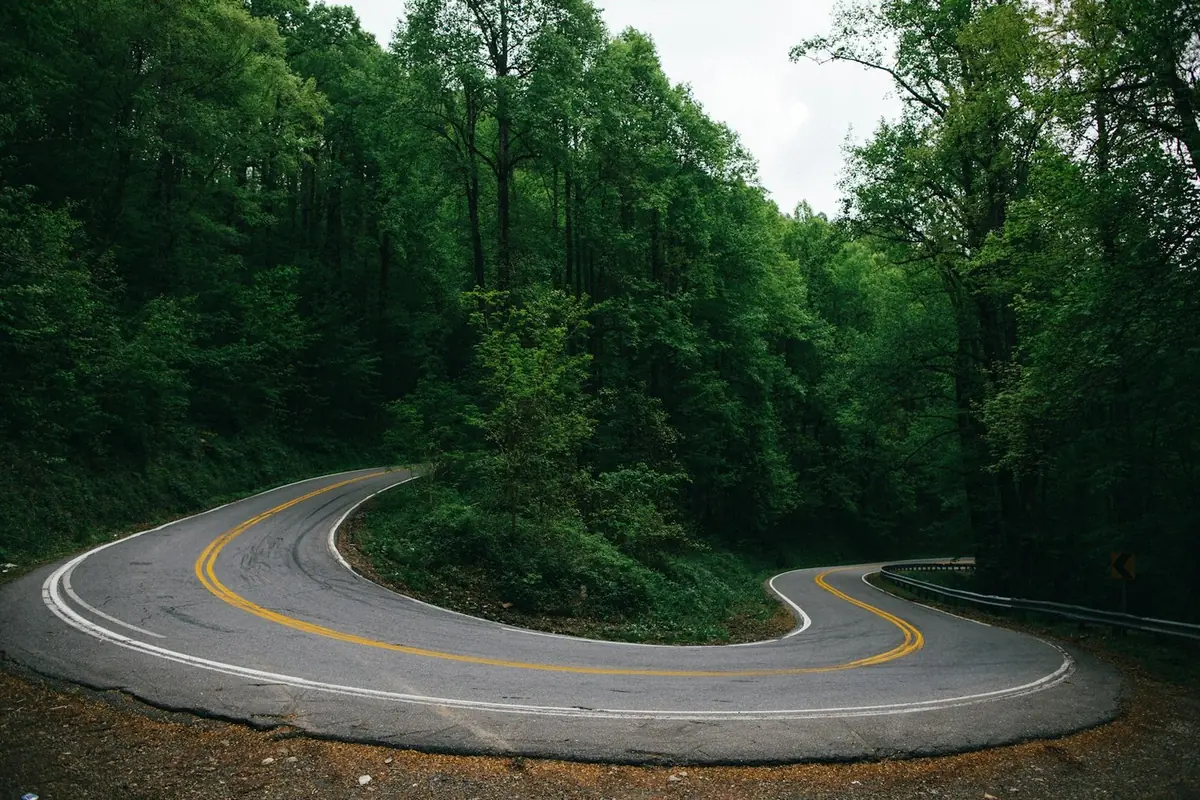
Take G65 north from Guilin, exit at Longsheng, then follow the signs for Longji. The final section is narrow and steep with many switchbacks. Drive slowly and watch for buses and local scooters.
Parking
Each main entrance has a paid parking area. From Ping'an parking, it is a 20–40 minute uphill walk to most hotels. Dazhai has a cable car option. If you have heavy luggage, ask your hotel about a porter or shuttle.
Getting around inside the terraces
Once you are through the entrance gate, the terraces are car-free. Movement inside is by three methods, and which you use depends on your village and energy level.
- Scenic-area shuttle: runs from the main gates to the village clusters. It is the standard way in if you are not staying right at the drop-off, and the fare is a small extra on top of the entrance ticket.
- Cable car (Dazhai): the Jinfoding (Golden Buddha Peak) cable car lifts you from the lower Dazhai parking to the top viewpoint. One way is roughly ¥55-70 and saves a steep 40-60 minute climb — worth it if you are short on time or not keen on the ascent.
- Walking: the paths between viewpoints are stone and earth, with long stair sections. Ping'an is the easier walk; Dazhai is steeper but more dramatic. Allow 30-60 minutes between major viewpoints, and more if you are hiking between the two villages.
- Porters: if you have heavy luggage and your hotel is up a path, ask about a porter or hotel shuttle when you book — many guesthouses meet guests at the shuttle stop.
Plan your inside-terraces movement around the light: go up for sunrise, come down mid-morning, and save the lower loops for the warmer middle of the day. The shuttles thin out in the late afternoon, so do not cut your return too fine, and confirm the last downhill departure with your hotel so you are not stranded after sunset.
Best Viewpoints at Longji
The three classic viewpoints each give a different angle on the terraces. If you stay one night, you can usually cover two at sunrise and sunset.
1. Viewpoint 1 – Dazhai / Jinkeng
The highest and most dramatic viewpoint in the Dazhai cluster, reached by cable car or a steep hike. It looks down on the full sweep of the Jinkeng terraces and is the best sunrise spot for photographers.
2. Viewpoint 2 – Seven Stars with Moon (Qixing Banyue)
The signature viewpoint in Ping'an, where seven small terraces circle one larger pool like moons around a planet. Best in the water-filled season when the pools mirror the sky.
3. Viewpoint 3 – Golden Buddha Peak (Jinfoding)
The top of the Dazhai cable-car line. The wide panorama shows layer after layer of terraces climbing the valley. Good at sunrise and late afternoon; avoid midday when the light is flat.
Best time to visit
Longji looks completely different depending on the week you go, because the terraces are a working landscape rather than a static view. Pick your season by what you want to photograph.
| Season | What you see | Crowds | Verdict |
|---|---|---|---|
| Water-filled (May – mid June) | Flooded terraces like mirrors, dramatic sunrise reflections | Busy at weekends | Best for classic photos |
| Green growth (July – August) | Lush green rice filling the terraces | Moderate, hot and humid | Good, less photogenic |
| Golden harvest (late Sept – Oct) | Golden terraces before the cut, clearest air | Busiest — book ahead | Best overall weather |
| Winter (Nov – March) | Bare terraces, mist, occasional snow at the top | Very quiet | Cheapest, least colourful |
Water-filled season (May to mid-June) is when the terraces are flooded before planting. Still water turns thousands of curved terraces into mirrors, and this is the image most people have seen. It is also the wettest period, so build in a spare day in case of low cloud.
Green season (July to August) is the growing period. The terraces are a solid, saturated green and arguably more impressive in person than on camera, but the light is hazier and the heat is real — start hiking early.
Golden harvest (late September to October) is the favourite for most visitors. The rice turns gold shortly before harvest, the air is clearest, and temperatures are comfortable. It is also the busiest window of the year, and October's National Day week should be avoided if you can.
Winter (November to March) is the quietest and cheapest time. Most terraces are bare and some are flooded for the next cycle, so the landscape is less dramatic — but you may have the viewpoints entirely to yourself, and frost or snow at the upper levels is possible.
Rice Harvest Experience (Sept–Oct)
Most travellers come to Longji to photograph the terraces. For two or three weeks each autumn you can do something far fewer visitors try: step down into them and harvest the rice yourself. Several Zhuang and Yao villages around Ping'an and Dazhai open their family terraces to small groups during the cut. For a modest fee you get a sickle, a quick lesson, and the genuinely unusual experience of spending a morning bent over golden rice that you will later eat.
This is the side of Longji that does not appear on the viewpoint platforms. The work is real, the welcome is genuine, and "paying to work and loving it" is a reaction we hear often from visitors who tried it.
What is the rice harvest experience?
Longji is a working landscape, not a museum. The rice planted in spring is ready to cut in late September or early October. Rather than leave the fields empty during this window, villages invite visitors to join the harvest. You learn to hold a sickle correctly, cut the stalks close to the base, and bundle them. In most sessions the rice is then threshed the traditional way — beaten against a wooden frame so the grain drops free. Local guides explain how the terraces have been farmed for more than 600 years and why the whole village moves together during harvest week.
The moment travellers remember most is the ending. After a morning in the fields, many experiences finish with a meal that includes rice threshed and cooked from what you cut that day. It is a direct, hands-on connection to a farming tradition that shaped this region — and exactly the kind of memory the big viewpoints cannot offer.
When can you experience it?
The harvest window is short and weather-driven. Use the dates below as a planning guide, then confirm the exact week with your hotel when you arrive.
| Area | Typical harvest window | Note |
|---|---|---|
| Dazhai (Jinkeng) | Late Sept – early Oct | Higher terraces; usually harvested first |
| Ping'an | Early — mid Oct | Slightly later; compact, easy-to-walk village |
| Lower / Huangluo terraces | Around early Oct | Timing varies with altitude |
As a rule of thumb, plan around September 25 to October 15. A cool, wet August can push the cut a little later, so treat the dates as a guide rather than a guarantee. Mornings between 8:00 and 10:00 are best: the air is cool, the light is soft on the gold terraces, and you finish before the midday heat. The entire harvest lasts only two to three weeks — miss it and you wait a full year.
How to book
You cannot buy a harvest ticket at the entrance gate. Booking is informal and village-based, and the most reliable route is through where you are already staying.
- Through your guesthouse or hotel: the easiest and most dependable option. Most family-run places inside Ping'an and Dazhai can arrange a session with a neighbouring household.
- Dazhai village visitor centre: staff can point you to households running experiences during the season.
- Yangshuo / Guilin tour agencies: some sell a Longji day trip that includes a harvest slot in season.
- Independently on arrival: possible but not guaranteed — households fill up on weekends, so do not count on walking in.
Prices typically run ¥80–150 per person, which usually includes the tools, a local guide, and a taste of the fresh rice. Book a day or two ahead, especially on weekends, and confirm the exact meeting point with your hotel.
What to bring and wear
| Bring | Why |
|---|---|
| Long sleeves and long trousers | Protects against cuts, sun, and insects |
| Grippy trainers or rain boots | Terrace paths and bunds are wet and slippery |
| Hat, sunscreen, and water | Little shade in the fields; mornings warm up fast |
| Gloves (some provided) | Saves your hands during cutting and threshing |
| A change of clothes | You will sweat, and wet soil stains easily |
Leave anything you do not want muddy in your hotel room. A small daypack for water and a phone is enough.
Tips for foreigners
- Safety first: sickles are sharp. Listen to the villagers, keep the blade away from your body, and cut with controlled, small strokes.
- Pace yourself: bending and cutting is tiring. Rest when you need to; nobody expects a visitor to keep up with locals.
- Photos are welcome: take pictures and video, but step aside so you do not block other participants.
- Respect the fields: do not walk on terraces that have not been harvested, and follow where the guide tells you to stand.
- Tipping: not required. A nice gesture is to buy a bag of local rice as a souvenir rather than leaving cash.
Photo opportunities
- Golden terraces plus the cutting motion: the classic shot — warm light, amber rice, and you mid-swing with the sickle.
- Threshing: the traditional beat-the-frame motion makes a great action frame.
- With villagers: ask before photographing anyone, then capture the moment together.
- Sunset over the terraces: stay for late light; the gold turns deepest near dusk.
Who it suits (and who might skip it)
The harvest is a great fit for travellers who want a hands-on cultural moment rather than another viewpoint photo: families with supervised children, photographers who want people-in-the-landscape frames, and anyone curious about rural China. It is less ideal if you have limited mobility — the work involves bending and uneven, wet ground — or if you are visiting outside late September to mid-October, when simply no harvest is running. If you are in the window and even slightly curious, we suggest trying it: it is low-cost, low-risk, and the most distinctive thing Longji offers. Pair it with a sunrise viewpoint and you have a full, memorable day on the terraces.
Related cultural experiences
Pair the harvest with other Longji traditions: the long-hair Yao performers at Huangluo (Huangluo Yao Village), the wooden Zhuang stilt houses, and sunrise from the Jinfoding (Golden Buddha Peak) viewpoint at Dazhai. For the wider picture on local culture and how to meet it respectfully, see our Guilin culture bridge guide. And for the full plan — dates, booking, costs, and what to pack — read our Longji rice harvest experience guide.
Ticket prices
Longji operates a single scenic-area ticket covering the main terrace clusters, and it is checked at the entrance gates rather than at each village.
- Adult ticket: about ¥80 per person for the Longji Rice Terraces scenic area.
- Concessions: students and seniors typically pay around half price with valid ID.
- Children: young children are usually free; policies vary by gate, so ask before paying.
- Cable car: at Dazhai there is a cable car up to the Golden Buddha Peak (Jinfoding) for a separate fee of roughly ¥55–70 one way — worth it if you are short on time or do not want the climb.
- Shuttle buses: internal shuttles between the entrance and some villages cost a small additional fee.
Buy at the gate on arrival; advance booking is rarely needed outside public holidays. Keep your ticket — it is checked again at some village entrances.
Ping'an or Dazhai?
The two main village clusters are different experiences, and most visitors pick one rather than trying to see both in a day.
| Ping'an Village | Dazhai (Jinkeng) | |
|---|---|---|
| Setting | Smaller, compact, closer to the entrance | Larger, higher, more spread out |
| Walking | Gentler paths, easier for a short visit | Steeper climbs; cable car available |
| Best viewpoint | Seven Stars with Moon (Qixing Banyue) | Golden Buddha Peak (Jinfoding) |
| Crowds | Busier with tour groups | Quieter away from the cable car |
| Best for | First visit, limited time, families | Photographers, hikers, overnight stays |
Ping'an is the original tourist village and the easier introduction. It is compact, the paths are manageable, and the classic viewing platforms are close together — good if you have half a day.
Dazhai is bigger and more dramatic, with the Golden Buddha Peak viewpoint at the top. The climbs are steeper, but the cable car removes most of the effort, and staying overnight here rewards you with the better sunrise. If you are hiking between the two, allow most of a day.
Photography tips for the terraces
Longji is one of the most photographed landscapes in China, and a little planning separates a snapshot from a frame worth keeping.
- Best light: sunrise and the hour before sunset are the money hours. The terraces catch warm side-light and the mist lifts off the valleys in the morning.
- Top viewpoints: Seven Stars with Moon (Qixing Banyue) at Ping'an, and Golden Buddha Peak (Jinfoding) at Dazhai for the wide overview.
- Season defines the shot: May-June for mirror reflections in the flooded fields; late September-October for solid gold. Both are busy, so arrive early for a clear platform.
- Gear: a wide lens for the sweeps, and a telephoto for layered terraces and village detail. A light travel tripod helps at sunrise.
- People and villages: ask before photographing locals, and during the harvest season the cutting and threshing make excellent action frames — step aside so you do not block the work.
- Drones: check current rules at the gate — flying is restricted in parts of the scenic area, and rangers do enforce it.
How long to stay
One night is enough to catch sunrise and sunset. Two nights is ideal if you want to hike between Ping'an and Dazhai or simply slow down.
A sample one-day Longji plan
If you have a single day (typical for a day trip from Guilin or Yangshuo), this rhythm makes the most of the light:
| Time | What to do |
|---|---|
| 7:00-9:00 | Arrive, take the shuttle up, catch sunrise from a viewpoint |
| 9:00-11:00 | Walk between platforms while the light is soft and crowds are thin |
| 11:00-13:00 | Late breakfast or check-in at your guesthouse, rest in the heat |
| 13:00-15:00 | Village walk, stilt-house visit, or cable car to Jinfoding |
| 15:00-17:30 | Lower paths and golden-hour photos before the shuttle thins out |
| 17:30+ | Sunset viewpoint, then descend or stay for the evening |
In late September to mid-October, swap one late-morning slot for the rice harvest experience — it runs in the cool morning hours and fits neatly around the light. An overnight stay lets you drop the 7am rush and add a proper sunrise without a pre-dawn transfer; see our day-trip guide for the bus timing.
Nearby hotels
Stay inside the terraces for the best experience, but confirm parking and luggage assistance in advance. Many hotels offer views from the room. See our hotel guide for parking-focused picks.
Book early if you are travelling in the autumn harvest window (late September to mid-October): it is the most popular time of year, and the family-run guesthouses that arrange harvest sessions fill first. A room up a short path from the shuttle stop saves you a luggage haul, and staying overnight lets you reach the sunrise viewpoints without a pre-dawn drive from Guilin.
Nearby attractions
Huangluo Yao Village is known for long-hair traditions. The drive back toward Guilin passes through green valleys and small towns worth a photo stop. Visiting in late September–mid October? You can join the rice harvest — see our Longji rice harvest experience guide.
In autumn the region also marks the Longji Red Rice Festival (usually late September), when villages celebrate the harvest with traditional Yao and Zhuang dress, singing, and food. It is small and rural — more atmosphere than crowding — and a good excuse to time your visit to the gold window.
For ticket prices, real-name entry rules, and how much walking each major site involves, see our attractions guide for German visitors.
Huangluo Yao Village & the long-hair tradition
Inside the Longji scenic area, near the Dazhai (Jinkeng) cluster, sits Huangluo Yao Village (黄洛瑶寨) — home to the Red Yao (红瑶), one of the region's minority groups. It is best known for a tradition few other places can match: the women of Huangluo keep their hair very long, often well past the waist and in some cases down to the floor, and gather each day to wash and comb it in a public performance that has become the village's signature cultural draw.
The long hair is more than a spectacle. Among the Red Yao it is a symbol of longevity, health, and beauty, and the daily long-hair show blends the hair ritual with Red Yao singing, dance, and distinctive embroidered dress. Visitors watch the combing and braiding, hear the folk songs, and can photograph the performers afterwards. It is a small, contained experience — a half-hour stop rather than a half-day — and it pairs naturally with a Dazhai viewpoint visit.
| What | Notes |
|---|---|
| Long-hair show | Daily performance; singing, dance, and the hair-combing ritual |
| Red Yao dress | Bright embroidered costumes; photo opportunities after the show |
| Wooden stilt houses | Traditional Yao architecture in the village itself |
| Terraces around the village | Lower terraces, quieter than the main viewpoints |
Huangluo is usually visited as part of a Longji day: most travellers see it on the way through Dazhai, or as a short add-on to a terrace viewpoint loop. The standout time is the Hanging-Clothes Festival (晒衣节) on the sixth day of the sixth lunar month (roughly early July), when the village lays its embroidered costumes and long hair out on the terraces — a vivid local event we cover in our festivals guide. For the respectful way to meet Yao and Zhuang communities on your trip, see our Guilin culture bridge guide.